
How Big the Universe Really Is
The universe is so big that your brain cannot truly picture it. Right now, you are sitting on a rock spinning at 1,000 miles per hour, floating in a sea of space that goes on forever. If you tried to drive a car to the edge of space, you would never arrive, even if you drove for billions of years.
Here is the short answer. The part of space we can see is about 93 billion light-years across. That means a beam of light, which is the fastest thing in existence, takes 93 billion years to cross it. Beyond what we can see, space might go on without ever stopping.
Start with Our Own Space Neighborhood
To see how big the universe really is, we have to start at home. Earth feels huge when you walk outside. It takes about 13 hours to fly from New York to Tokyo in an airplane. But Earth is just a tiny marble in our solar system.
The Moon is our closest neighbor in space. It sits about 238,900 miles away from your house. You could fit 30 Earths in the gap between us and the Moon. A fast rocket takes three whole days to get there. That sounds far, but it is just a step across the street compared to the rest of the Solar System.
The Sun is 93 million miles away from Earth. Light travels super fast, at 186,000 miles every single second. Yet, light from the Sun still takes eight minutes to hit your eyes. When you look at a sunset, you see the Sun as it was eight minutes ago. If the Sun went out right now, you would not know for eight full minutes.
Now think about Neptune, the last real planet in our system. It sits nearly 2.8 billion miles from us. A radio call sent from Earth at the speed of light takes over four hours to reach a probe near Neptune. We are still just standing in our own front yard.
Crossing the Space Between the Stars
Once you leave our Sun behind, the distance to the next star gets scary fast. Miles stop making sense because the numbers get too big to write down easily. Scientists use a ruler called a light-year instead. One light-year is the distance light travels in one full year. That is about 5.88 trillion miles.
The closest star system to our Sun is called Alpha Centauri. It is 4.2 light-years away from us. If you hopped in the fastest spacecraft humans ever built, the Parker Solar Probe, it would still take you over 8,000 years to reach it. That is longer than all of written human history.
If our Sun were the size of a tiny sand grain on a beach, the next closest star would be another sand grain located four miles away. All the space between those two tiny grains is totally empty. That is how empty space really is. Stars are not packed close together like city streetlights. They are lonely campfires scattered across a dark ocean.
Understanding these vast spaces can feel a bit like watching market trends shift, where big swings happen over long periods, much like Why Crypto Prices Go Up and Down Every Day due to forces we cannot always control right away.
The Milky Way Is Full of Billions of Sun-Like Stars
Our Sun is just one single star inside a massive city of stars called the Milky Way galaxy. Our galaxy is shaped like a giant spinning wheel with long spiral arms made of dust, gas, and stars.
How big is the Milky Way? It is about 100,000 light-years across. If you sent a light signal from one edge of our galaxy, your great-great-grandchildren would be long gone before that signal even reached the center.
- Our galaxy holds between 100 billion and 400 billion stars.
- Almost every single star has at least one planet orbiting around it.
- Our Sun sits about halfway out from the center, in a quiet arm called the Orion Arm.
- It takes our Sun 230 million years just to make one circle around the galaxy center.
The last time our Sun was in this exact spot in the galaxy, dinosaurs were just beginning to walk on Earth. That gives you a sense of how vast our galaxy truly is. Yet, the Milky Way is only one galaxy among untold numbers of others.
Galaxies as Far as Light Can Reach
For a long time, people thought our galaxy was the whole universe. Then, in 1924, an astronomer named Edwin Hubble looked through a big telescope in California. He saw faint smudges of light that were far outside the Milky Way. They were whole other galaxies.
Our nearest big galaxy neighbor is Andromeda. It is 2.5 million light-years away from Earth. When you look at Andromeda in the night sky with binoculars, the light touching your eyes left that galaxy when early human ancestors were first walking around. You are looking back in time through 2.5 million years of space.
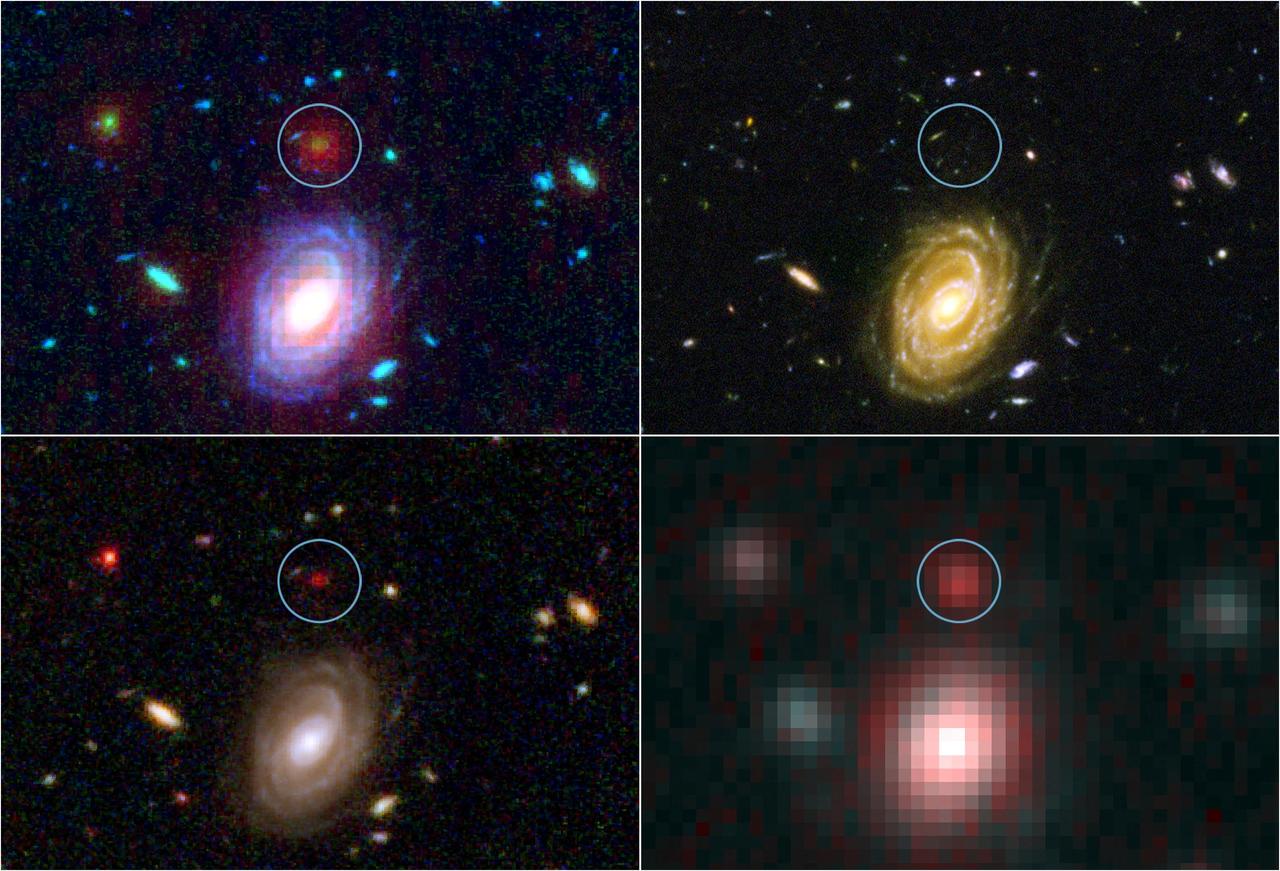
Scientists once pointed the Hubble Space Telescope at a tiny dark spot in the sky. It looked like total pitch-black empty space. The telescope left its camera eye open for ten days to collect faint light. When the picture came back, it was not empty. That tiny dark spot held over 10,000 whole galaxies, each containing hundreds of billions of stars.
If you check a trusted source like Wikipedia's entry on the Universe, you will see that astronomers think there are at least two trillion galaxies in the part of space we can measure. Two trillion galaxies! Multiply that by billions of stars per galaxy, and there are more stars in space than every single grain of sand on every beach on Earth.
How Big is the Observable Universe Right Now?
So, how big the universe really is comes down to what we can see versus what is actually out there. We call the part we can see the observable universe.
The universe started about 13.8 billion years ago in an event called the Big Bang. Because the universe has an age, light has only had 13.8 billion years to travel to our eyes. You might think that means the edge of space is 13.8 billion light-years away. But space has been growing bigger the whole time light was traveling.
While light was running toward us, the space between galaxies stretched out like a rubber band. That stretch pushed those distant galaxies further away from us. Today, the places that gave off the oldest light we can see are now 46.5 billion light-years away in every direction.
Add both sides together, and the observable universe is a giant sphere 93 billion light-years wide. That is 547 sextillion miles across. That is a 547 followed by 21 zeros. Numbers that big lose their meaning, but the scale is real.
What Lies Beyond the Edge We Can See?
What happens if you travel past that 93-billion-light-year boundary? Do you hit a wall? Does space just stop?
The short answer is no. Space does not have a hard brick wall at the end. The edge of the observable universe is just the limit of what we can view today. It is like standing on a boat in the middle of the ocean. You can only see to the horizon line, but you know the ocean keeps going past where your eyes can reach.
Most scientists think space goes on forever without stopping. It might be infinite. If space is truly infinite, that leads to mind-bending ideas. In a space that never ends, every possible way to arrange atoms has to happen somewhere out there. That would mean there are other planets just like Earth buried deep in the dark, far beyond our sights.
Even if space is not infinite, it might wrap back around on itself like a giant ball, so if you flew in a straight line forever, you would eventually end up back where you started. You can read more about space and how we explore it by checking out space facts and space science updates on our main page.
Every time you look up at the night sky, you are looking out into an ocean with no bottom and no shore. It makes our everyday troubles feel tiny, but it also shows how special it is that we are here on this small blue rock, able to look out into the dark and wonder about it all. Tonight, step outside, look at a bright star, and remember just how far that light traveled to find you.


Post a Comment