
How We Find Planets Around Other Stars
Astronomers have found more than 5,000 planets orbiting stars far beyond our sun. Finding a planet around another star is like trying to spot a tiny firefly buzzing next to a blinding searchlight miles away. Yet scientists manage to catch them every single week using clever light tricks and powerful space telescopes.
We discover these distant worlds by watching how their home stars change. A planet is usually too dim to see on its own, so we look for the wobble it gives its star or the shadow it casts when it glides past. These simple clues reveal how big the planet is, how fast it moves, and even what its sky feels like.
The Transit Method: Catching a Planet's Shadow
The easiest way to find a planet is to wait for it to pass right in front of its star. When the planet crosses between the star and Earth, it blocks a tiny bit of starlight. Astronomers call this event a transit. Think of it like a moth flying in front of a porch light, making the bulb dim for a quick second.
Space telescopes stare at thousands of stars at the same time, waiting for that light to drop. The drop is incredibly small. A giant gas planet like Jupiter might block one percent of a star's light. A tiny planet like Earth blocks less than one-tenth of one percent. It is a tiny dip, but sensitive cameras can pick it up easily.
Timing these dips tells us a big story. If the starlight dims every 365 days, we know that planet takes a full year to circle its star. The size of the dip tells us the size of the world. A bigger drop in light means a bigger planet. NASA's Kepler space telescope used this exact trick to discover thousands of alien worlds during its mission.
Sometimes, buying time on these massive search projects requires wild budgets, just like how people track how high-tech networks run in How Crypto Exchanges Work When Buying Your First Coins. But in space science, the payoff is learning that our galaxy is packed with worlds.
The Radial Velocity Method: Watching Stars Wobble
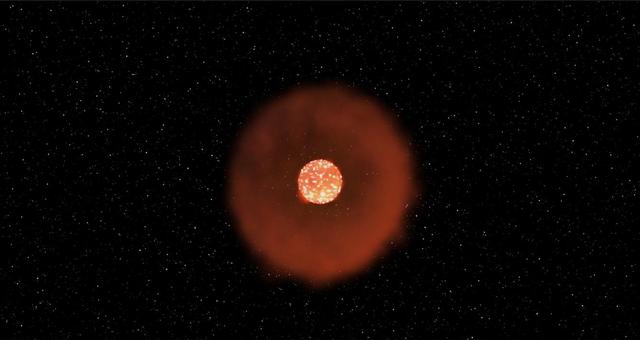
Planets do not just circle their stars. They actually pull on them. Gravity is a two-way street. While the star pulls hard on the planet, the planet gives a small tug back on the star. This tug makes the star dance around in a tiny circle or wobble back and forth.
We cannot always see the star move side to side, but we can watch its light change color. As a star wobbles toward Earth, its light waves get squished together and look slightly bluer. As the star wobbles away from us, the light waves stretch out and look slightly redder. Scientists call this color shift the Doppler effect. It is the same reason a police siren sounds high-pitched as it rushes toward you and drops low as it speeds away.
By measuring these subtle color shifts, astronomers can figure out how heavy the planet is. A massive world pulls its star with great force, creating a big wobble. A lighter world creates a tiny nudge. Combining this weight with the size we get from the transit method tells us if the world is made of solid rock, thick gas, or pure water ice.
Taking Direct Pictures of Alien Worlds
Can we just take a normal photo of an alien planet? Most of the time, the answer is no. The star glows millions of times brighter than any world orbiting it, washing out the picture completely. But for a few special worlds, astronomers have figured out how to block the glare.
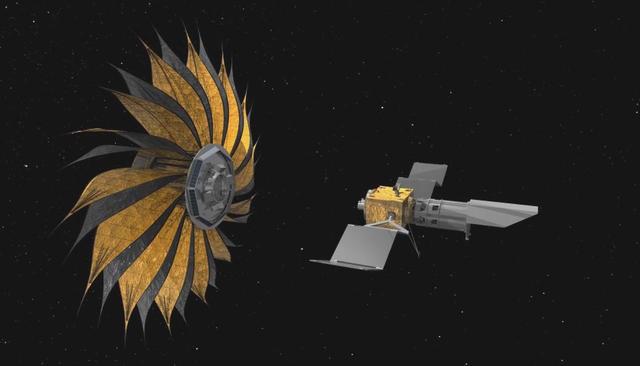
Direct imaging works best for huge planets that are young and hot. These young giants glow with their own warm infrared heat. Astronomers use a special mask inside a telescope to block the bright light of the main star, creating an artificial eclipse. Once the star is hidden, the dim points of light from the planets pop out around it.
Scientists have taken real videos of four giant planets dancing around a star named HR 8799. Watching those tiny dots move over several years proves that solar systems like ours are scattered everywhere across the cosmos. To read more about how these star systems fit into the wider space around us, check out this guide on the Solar System.
How Starlight Bends Around Hidden Worlds
Gravity can act like a giant magnifying glass in deep space. Albert Einstein showed us that massive objects bend the path of light traveling near them. Astronomers use this trick to find planets that are far too dark or distant to spot any other way.
This method is called gravitational microlensing. Imagine a distant star shining brightly in the background. A closer star passes directly between that background star and Earth. The closer star's gravity acts like a glass lens, bending and brightening the background starlight for a few weeks.
If the closer star happens to have a planet orbiting it, that planet adds its own tiny boost to the light. Scientists see a sharp extra spike in brightness that lasts for just a few hours. This quick spike reveals the hidden planet. It is a fantastic way to find cold worlds that sit far away from their stars, though the event only happens once per star system.
What Alien Skies Tell Us About Life
Finding a planet is only the first step. The real dream is figuring out what sits on its surface. When a planet transits, a small amount of starlight shines straight through the edges of its atmosphere before reaching our telescopes. The gases in that atmosphere absorb specific colors of light, leaving tiny dark lines in the light spectrum.
By reading those lines like a bar code, astronomers can list the gases floating in an alien sky. We have already detected water vapor, carbon dioxide, and sodium around distant planets. The James Webb Space Telescope does this right now, searching for thin skies around small rocky worlds.
If we find a planet with oxygen, methane, and water all together, that could be a huge clue. On Earth, life keeps those gases balanced. Finding that same mix on a far-off rock might mean we are finally looking at an inhabited world. You can read fresh updates on deep space findings across our space facts blog to see what telescopes discover next.
How You Can Help Find New Worlds Today
You do not need a space agency job to help spot planets. Space telescopes gather way more data than professional scientists can check on their own. Anyone with a computer can join citizen science projects online and search through real telescope light graphs.
Volunteers have helped find dozens of strange planets that computers missed at first glance. Computer programs look for neat, predictable patterns, but human eyes are great at spotting odd dips in light that point to unexpected worlds. Some volunteers have even had planets named after them for their sharp eyes.
The universe is filled with hundreds of billions of stars, and almost every single star seems to host at least one planet. As our tools get better, we get closer to answering the biggest question of all: is anyone else out there looking back at us?
Next time you step outside at night, pick a bright star in the sky and wonder what kind of world might be circling it right now.


Post a Comment